Amutat Kaima
Amutat Kaima created and leads Israel’s social farming network, linking local agriculture with educational and mental health care services for diverse populations.
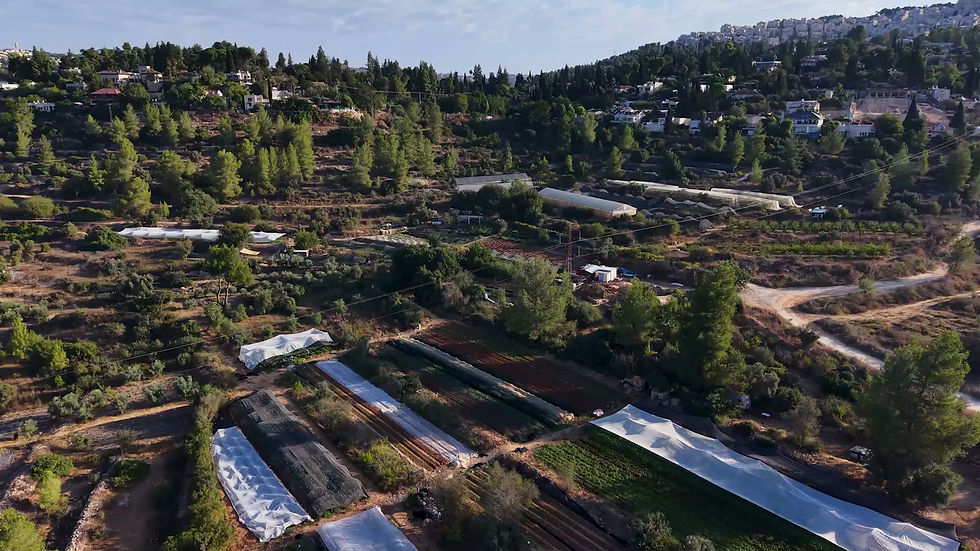
Kaima began in 2013 as a single farm—one plot of land, one idea: that hands in the earth could change a life, a community, and a country.
That idea took hold and grew into a movement rooted in social farming that, today, in a post-October 7 world, is helping reconnect people to the land.
Presently, Kaima directly oversees five social farms and has either established or inspired the creation of more than 40 initiatives across Israel.


Kaima at a Glance
40+
social farming inititiaves across the country inspired by Kaima's "hands-in-the-earth" therpeutic model
20k+
hours of trauma-recovery outreach delivered to returning reservists, abuse survivors, & individuals rebuilding life after crisis
1,850+
vulnerable young people completed Kaima's full-time farm employmet & empowerment program
21+
acres of outdoor learning classrooms in our immediate network
290k
kg of pesticide-free veggies, grown by our intergenerational teams annually
What is Social Farming?
Kaima’s multifunctional view of social farming is defined by efforts that connect local agriculture with welfare and mental health care services at the community level. Relying on best practices acquired over more than a decade, Kaima’s programming utilizes the inherent therapeutic, life-affirming nature of agricultural work to help improve the lives of people with special social, educational, and/or emotional needs.
Kaima Institute (Machon Kaima)
For the Study of Relationships Among People, Society, and Living Environments
In 2013, when we founded Kaima in Beit Zayit, we brought together two concepts often seen as separate: rigorous, productive organic farming and alternative learning for youth disconnected from conventional education. We believed then, as we do today, that hands-on work in the soil creates the right conditions for genuine human connection, breaks down defenses, and fosters deep emotional healing.
That first farm became the birthplace of social and therapeutic farming in Israel. It also served as a knowledge incubator, allowing us to train dozens of practitioners and lay the groundwork for the field to grow into a movement.
Today, the Kaima Institute serves as the movement's central hub for conceptual development, learning, and methodology. It operates as a living field laboratory: a space for ongoing observation and applied research into the relationship between people and their environment, where insights are immediately integrated into practice. The Institute's work focuses on developing a shared professional language and standards, training leaders of social farming sites, and advancing policy and infrastructure across the field.


